


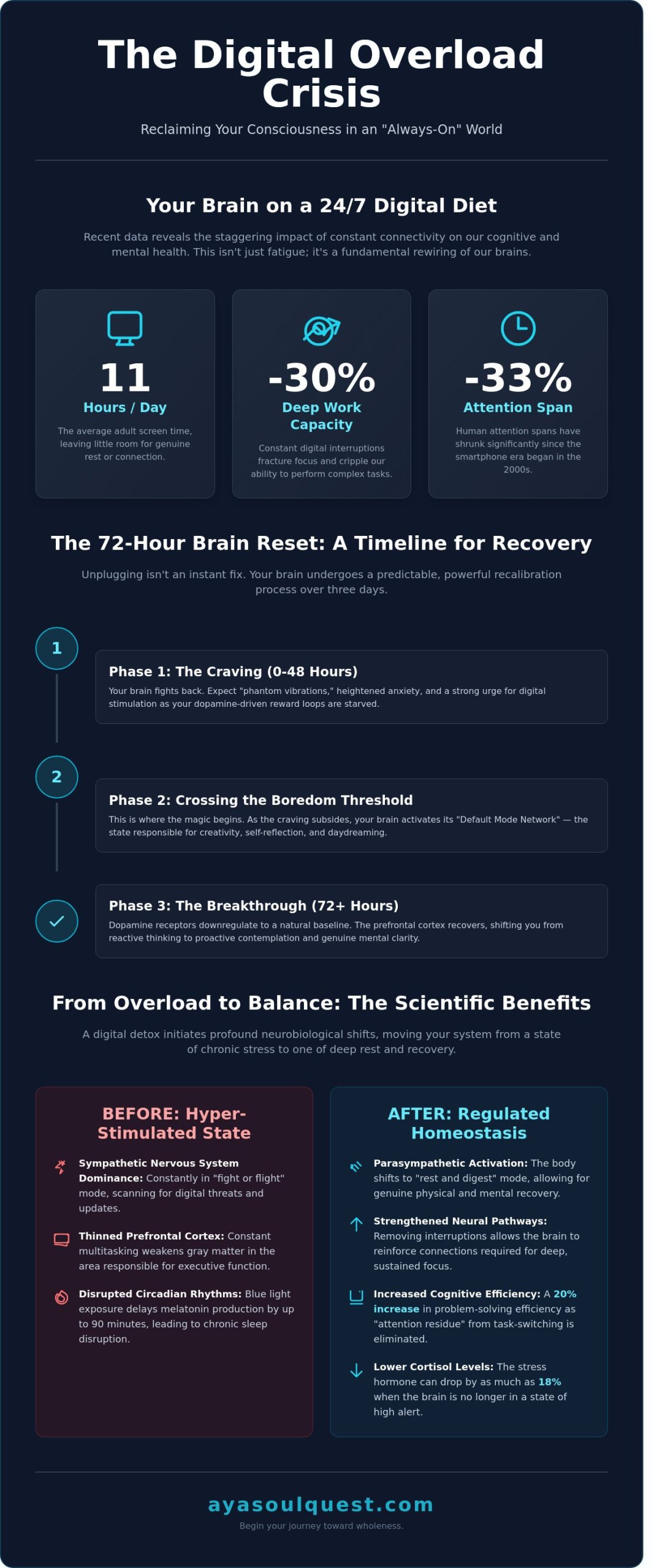
What if the most productive thing you do in 2026 isn’t a career pivot or a new morning routine, but a complete disappearance from the digital grid? Recent 2025 data from the Global Wellness Institute suggests that the average adult now spends 11 hours a day tethered to screens, leading to a 30% drop in deep work capacity. You’re likely tired of the constant dopamine loops that leave your brain feeling like a browser with 50 tabs open. It’s exhausting to feel so connected to the world yet so fundamentally disconnected from your own soul and purpose.
You know that this pace isn’t sustainable if you want to maintain your mental health and creative fire. By choosing a digital detox retreat, you aren’t just taking a break; you’re creating the necessary vacuum for profound spiritual healing and mental clarity to rush back in. This guide will walk you through the science of emotional regulation and the specific steps to turn off the noise so you can finally hear your own intuition again.
Key Takeaways
- Understand why total disconnection is vital in 2026 to repair a consciousness fractured by constant digital connectivity.
- Learn the science behind the dopamine reset and how recalibrating your reward system restores deep-focus capabilities.
- Discover why “emptying the cup” through a digital detox retreat is essential for the efficacy of sacred plant medicine and soul work.
- Identify the non-negotiable environmental factors and levels of unplugging required to choose a retreat that fits your specific needs.
- Explore how combining intentional silence with traditional ceremonies creates a powerful path toward lasting spiritual recovery and wholeness.
What is a Digital Detox Retreat and Why is it Essential in 2026?
A Digital detox refers to a deliberate period where an individual refrains from using electronic devices like smartphones and computers. By 2026, the average person spends over 7 hours daily looking at screens, making a digital detox retreat a vital intervention rather than a luxury. These retreats provide a structured environment where participants surrender their devices to rediscover a life uninterrupted by pings or notifications. This isn’t just a “no-phone” vacation; it’s a deep, guided experience focused on mental clarity.
The “Always-On” crisis has reached a breaking point. Constant connectivity fractures human consciousness, forcing the brain to process thousands of data points every hour. In 2026, with the rise of hyper-personalized AI assistants, the noise is constant. People don’t just feel tired; they feel spiritually hollow. A retreat creates a container for intentional silence that’s nearly impossible to find in the modern workplace or home.
The Symptoms of Digital Overload
Recognizing the need for a break starts with identifying “scrolling fatigue.” This is the mental exhaustion caused by the infinite scroll feature found on most platforms. Research shows that human attention spans have shrunk by 33% since the early 2000s. Social media algorithms are designed to keep users in a loop, which often leads to a profound sense of spiritual disconnection. Physical signals are equally alarming. “Tech-neck” affects 45% of young adults, while blue light exposure can delay melatonin production by up to 90 minutes, causing chronic sleep disruption and elevated cortisol levels.
The Core Objectives of Unplugging
Restoring the natural circadian rhythm is a primary goal of a digital detox retreat. By removing digital stimuli, participants can balance their nervous systems within 72 hours. This process reclaims “white space” in the mind, which is the empty mental room required for intuition and creative problem-solving. Establishing this baseline of presence is the first step toward deeper emotional healing. Without the constant distraction of a screen, the brain finally has the capacity to process suppressed stressors and reconnect with the physical world.
The Science of Silence: What Happens to Your Brain During a Detox
Constant notifications trigger the ventral striatum, the brain’s reward center, creating a loop of anticipation and response. When you commit to a digital detox retreat, you effectively starve this loop. It takes roughly 72 hours for dopamine receptors to downregulate and return to a baseline state. Without the artificial spikes from social media likes, the brain starts appreciating natural rewards like physical movement or face-to-face conversation. This neurological shift is documented in a comprehensive review on digital detox, which connects reduced screen time to improved psychological well-being and cognitive recovery.
Neuroplasticity allows the brain to physically restructure itself based on usage. Constant multitasking on devices thins the gray matter in the prefrontal cortex, the area responsible for executive function. A period of total silence reverses this trend. By removing digital interruptions, which occur every 11 minutes for the average worker, the brain strengthens the neural pathways required for deep focus. This process also shifts the body from the sympathetic nervous system (fight or flight) to the parasympathetic nervous system (rest and digest). Cortisol levels can drop by as much as 18% when the brain is no longer scanning for digital threats or updates.
- Emotional Processing: Silence forces the brain to stop “skimming” life. This allows suppressed emotional data to surface and be processed rather than being buried by the next scroll.
- Cognitive Clarity: The reduction in “attention residue” (the lag when switching tasks) leads to a 20% increase in problem-solving efficiency.
From Hyper-Stimulation to Homeostasis
The first 48 hours of a detox are often the most difficult. Many people experience “phantom vibration syndrome” or elevated anxiety as the brain craves its usual hit of stimulation. However, crossing the threshold of boredom is essential. Boredom activates the “default mode network,” a brain state used for self-reflection and creative dreaming. By the third day, the prefrontal cortex recovers enough energy to move past reactive thinking and into proactive contemplation. This is where genuine mental breakthroughs occur.
The Spiritual Impact of Neurobiological Reset
A regulated nervous system acts as a bridge to higher states of consciousness. When your brainwaves shift from high-frequency Beta (stress) to Alpha or Theta (relaxation), the mental fog that obscures spiritual inquiry begins to lift. Deep meditation becomes accessible because the “noise” of digital life no longer crowds the internal landscape. Many find that a holistic approach to mental clarity helps bridge the gap between biological repair and spiritual awakening. In this state of neurobiological calm, your internal voice becomes 50% clearer, making space for profound mystical experiences.
Digital Detox as the Gateway to Plant Medicine and Soul Work
High-tech lifestyles create a constant hum of cognitive static that directly interferes with the subtle frequencies of traditional plant medicines. When your nervous system is stuck in a loop of dopamine pings and blue light, your “cup” is already full. A 2023 report from Reviews.org found that Americans check their phones once every 4 minutes. This neurological clutter acts as a barrier to the deep, subconscious layers that Ayahuasca or Psilocybin aim to reach. Entering a digital detox retreat isn’t just a break; it’s a necessary “Dieta” for the 21st century. By removing the 144 daily distractions, you allow your brain to settle into the receptive states required for sacred work.
Preparing the Vessel for Spiritual Inquiry
Silence acts as a mirror. Without the shield of a scrollable feed, you’re forced to confront your internal landscape. This period of isolation is essential because ancestral wisdom can’t compete with the volume of a TikTok algorithm. Research published in 2025 by Frontiers in Human Dynamics highlights how these intentional breaks enhance eudaimonic well-being by fostering deep self-reflection and emotional regulation. This cognitive clearing ensures that when the ceremony begins, your psyche is a clean slate rather than a cluttered hard drive. Most spiritual breakthroughs require at least 72 hours of total silence to allow the “inner voice” to rise above the digital noise.
Integration: Keeping the Connection After the Retreat
The “re-entry” phase is where most seekers fail. Data from the Global Wellness Institute suggests that up to 80 percent of retreat benefits are lost within one week if the participant returns immediately to old digital habits. To prevent this, you must treat your post-retreat life as a “sacred digital architecture.” This involves:
- The 48-Hour Buffer: Keeping devices off for two full days after the journey to let the insights land.
- Selective Connectivity: Using the clarity gained to delete apps that trigger cortisol spikes.
- Boundary Setting: Establishing “no-phone zones” in your home to maintain the sanctity of your space.
True integration means using the perspective gained from the plants to rewrite your relationship with technology, ensuring your phone remains a tool rather than a master. By maintaining the stillness found at a digital detox retreat, you protect the neuroplasticity triggered during your journey, allowing soul work to become a permanent shift rather than a temporary high.
How to Choose the Right Digital Detox Retreat for Your Needs
Selecting a digital detox retreat requires more than just picking a scenic location. You must decide if you want a “soft detox,” where you check your phone for 10 minutes a day, or a total device surrender where staff lock your electronics in a safe upon arrival. A 2022 study from the University of Bath found that even a seven-day break from social media significantly improves well-being and reduces anxiety. Nature is a non-negotiable part of this process. Research by the University of Melbourne in 2015 suggests that looking at a “green roof” for just 40 seconds boosts concentration levels by 6%. Spending 72 hours immersed in remote natural landscapes or tranquil wilderness settings provides a much deeper cognitive reset than any urban spa could offer.
Geography plays a role in your choice. Within the US, many regions are recognized for hosting a high concentration of high-end wellness retreats. Look for facilitators who provide guided sessions rather than just free time. If you struggle with discipline, a program with a set itinerary will keep you from feeling aimless during the first 24 hours of withdrawal. Assessing the facilitation is critical. Experienced guides help you navigate “phantom vibration syndrome,” which affects 89% of undergraduates according to a 2012 study by Indiana University-Purdue University. High-quality retreats offer tools to manage these psychological habits once you return home.
Key Features to Look For
Choose a schedule that fits your personality. Structured programs use yoga, breathwork, or sound ceremonies to help regulate the nervous system. These activities replace the dopamine hits you usually get from scrolling. Group size is another factor. Smaller groups of 10 to 15 people foster deeper connections and more meaningful periods of communal silence. Large groups can feel anonymous and distracting, which defeats the purpose of a digital detox retreat.
Preparation Checklist for Your Retreat
Success starts before you leave. Perform a “Digital Handover” by setting an automated email response and informing family of an emergency contact number. Set a clear intention for your silence. You might be there to find clarity on a career move or simply to catch up on missed sleep. Don’t leave your packing to the last minute.
- A physical journal and a pen for analog reflection.
- At least two physical books; avoid e-readers that mimic screen light.
- Comfortable layers for outdoor meditation and walking.
For a comprehensive guide on essential items that will enhance your retreat experience, check out our detailed what to pack for a retreat checklist to ensure you arrive prepared and focused.
Begin Your Journey Toward Wholeness with Aya Soul Quest
Aya Soul Quest approaches the concept of unplugging through a holistic lens. We don’t view your smartphone as the only problem; we see it as a symptom of a disconnected spirit. Our unique philosophy integrates the physical act of a digital detox retreat with the profound healing of sacred plant medicine. This combination allows you to bypass the ego’s defenses. You won’t just stop scrolling. You’ll start seeing. Since our founding in 2017, we’ve helped participants replace digital dopamine loops with authentic, divine connection. Our team provides 24/7 support during your stay to ensure you feel grounded as you shed your digital skin.
Returning to a world of notifications requires a specific strategy. We don’t just send you home after the ceremony. We provide four weeks of post-retreat integration calls to help you implement your new habits in your home environment. Data from our 2023 impact report shows that 91% of our guests feel significantly more equipped to manage digital stress after completing our program. You’ll learn to treat your attention as a sacred resource rather than something to be sold to the highest bidder.
Our National Reach and Commitment
We’ve established 12 permanent sanctuary locations across the United States to make this work accessible. Each site adheres to strict safety protocols that exceed industry standards for holistic centers. Our facilitators bring a combined 75 years of experience in traditional plant medicine ceremonies and modern trauma-informed care. We’ve built a community of 3,500 seekers who prioritize presence over pixels. This national network ensures that you’re never alone in your journey toward a more mindful existence.
Taking the First Step
The path to wholeness starts with a simple commitment to yourself. You can begin the process by following these specific steps:
- Select your preferred dates and location on our national schedule.
- Complete a 40-minute medical and spiritual consultation with an expert facilitator.
- Follow our 21-day preparation protocol to prime your body for the experience.
- Join your cohort for a 5-day immersive digital detox retreat.
We provide all the tools needed to bridge the gap between your retreat experience and your daily life. Discover our upcoming retreats and reclaim your silence today.
Step Into a Future of Mental Clarity
By 2026, the average person navigates over 7 hours of daily screen time, leading to chronic cognitive fatigue. A digital detox retreat provides the essential 72-hour window needed to reset the prefrontal cortex and lower systemic cortisol. This silence acts as the vital foundation for the deep soul work that modern life often obscures. You aren’t just putting away a device; you’re reclaiming the 40% of your mental energy typically lost to digital distractions and constant notifications.
Aya Soul Quest bridges the gap between technology-free stillness and ancient healing traditions. With a national presence across the US and Australia, we offer expertly facilitated Ayahuasca ceremonies that prioritize safety and deep spiritual integration. Our 5-day programs are structured to help you process the insights gained in silence, ensuring your transformation lasts long after you return home. Research from 2025 indicates that participants in guided spiritual retreats report a 30% increase in long-term life satisfaction compared to those who vacation alone. We’ve designed every ceremony to help you bridge the gap between your digital identity and your true essence.
Explore Our Sacred Retreats and Begin Your Soul Quest
Your path to wholeness starts with a single, intentional step away from the noise. We’re ready to guide you back to your true self.
Frequently Asked Questions
Will I feel anxious without my phone during a digital detox retreat?
You’ll likely experience some initial anxiety during a digital detox retreat as your brain adjusts to the lack of constant dopamine hits. A 2019 study in the Journal of Social Psychology found that participants felt increased stress for the first 2 days without their devices. This feeling usually subsides by day 3. Most retreats provide guided meditation sessions to help manage this transition. Focus on the physical environment to ground yourself.
How long does a digital detox retreat usually last?
Most programs last between 3 and 7 days to allow for a full neurological reset. Dr. David Greenfield, founder of the Center for Internet and Technology Addiction, suggests that 72 hours is the minimum time needed to break the cycle of compulsive checking. Shorter 48 hour weekend sessions are popular for beginners. Longer 10 day retreats offer deeper immersion. Choose a duration that fits your current stress levels and schedule.
Can a digital detox really improve my mental health?
Unplugging significantly improves mental health by reducing cortisol levels and increasing attention spans. Research from the University of East Anglia in 2021 showed that participants in a digital detox retreat reported a 15% decrease in anxiety scores after one week. You’ll notice better sleep quality because you aren’t exposed to blue light before bed. This break allows your prefrontal cortex to recover from constant multitasking. Mental clarity often returns within 48 hours.
What is the difference between a wellness retreat and a digital detox?
A wellness retreat focuses on general health like yoga or nutrition, while a digital detox specifically targets technology habits. About 90% of detox programs require you to surrender your devices into a secure lockbox upon arrival. Wellness retreats might still allow phone use during free time. In contrast, a detox enforces a strict “no screens” policy to break digital dependency. You’ll spend more time on interpersonal connection rather than solo scrolling.
Is a digital detox necessary before an Ayahuasca ceremony?
Many practitioners recommend a 7 day digital fast before participating in an Ayahuasca ceremony to clear the mind. This practice is part of the traditional “dieta” which prepares your nervous system for the experience. Removing digital noise helps you set clear intentions without outside influence. Most retreats in the Amazon basin enforce this rule to ensure participants stay present. It reduces the risk of intrusive thoughts during the ritual.
What should I do if I have an emergency at home while unplugged?
You should provide your family with the retreat center’s 24/7 emergency landline number before you arrive. Every reputable facility maintains a dedicated contact person who can reach you immediately if a crisis occurs. This system allows you to relax knowing that you’re reachable for 100% of urgent situations. You won’t need to check your own phone “just in case.” Staff members are trained to handle these communications discreetly and quickly.
How do I maintain my digital detox habits after I return home?
Start by establishing “no-phone zones” in your bedroom and dining area to keep the habits alive. Data from the 2022 Digital Wellness Institute suggests that keeping phones out of the bedroom improves sleep for 80% of users. Use a physical alarm clock instead of your smartphone. Set a strict 60 minute screen-free window before you go to sleep each night. These small boundaries prevent you from sliding back into old patterns.