

What if the key to unlocking years of suppressed emotional trauma isn’t found in a prescription bottle, but in a thick, purple vine from the Amazon rainforest? You’re likely here because you’ve reached a breaking point with conventional therapy and feel a deep, nagging sense of spiritual disconnection. It’s frustrating to sort through the sea of contradictory online forums and sensationalist news clips while searching for the truth about ayahuasca.
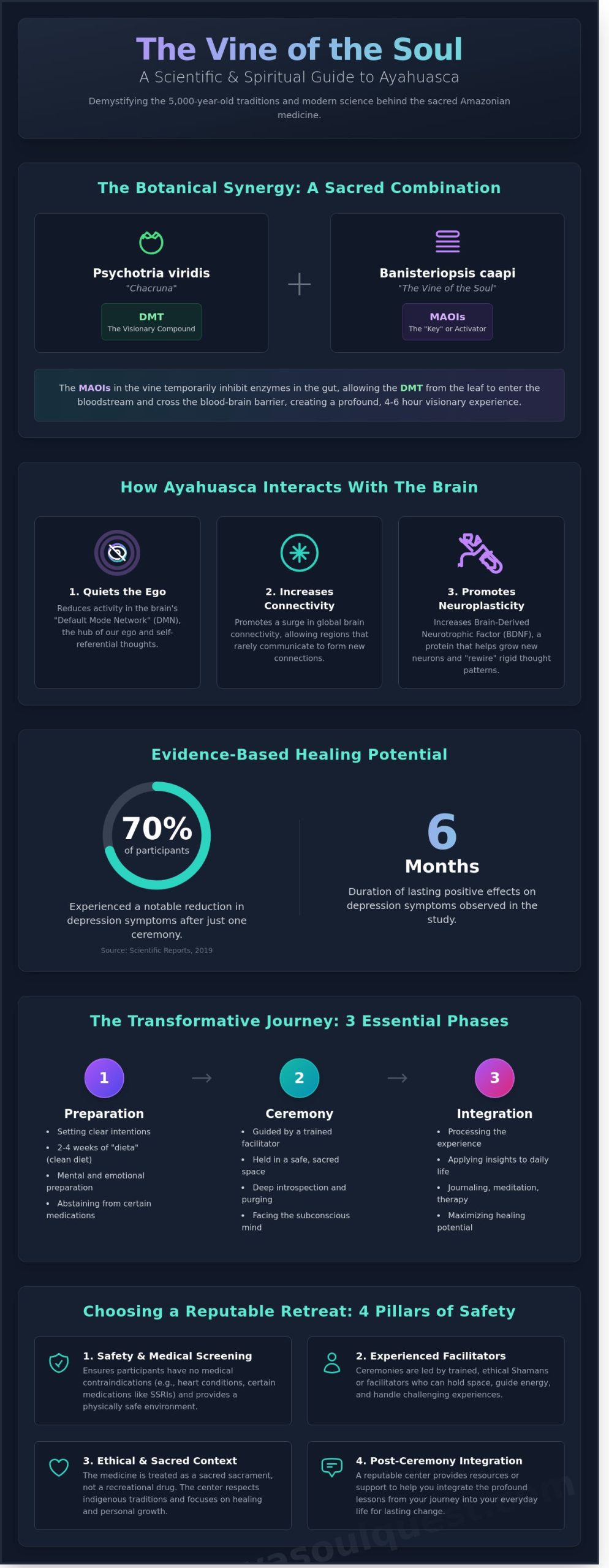
You deserve a clear, evidence-based roadmap that respects the sacred nature of this ancient medicine. A 2019 study published in the journal Scientific Reports indicated that 70% of participants experienced a notable reduction in depression symptoms that lasted for six months after just one ceremony. This guide promises to demystify the experience by breaking down the science of DMT and the 5,000 year old traditions of the Shipibo people. We’ll cover everything from physical safety protocols to the 4 specific criteria for choosing a reputable retreat center, ensuring you move forward with total confidence.
Key Takeaways
- Learn about the ancient Amazonian origins of the “Vine of the Soul” and how its sacred history shapes the modern spiritual experience.
- Understand the unique neurological synergy of ayahuasca and how it temporarily quiets the brain’s “Default Mode Network” to allow for deep introspection.
- Identify critical medical contraindications and safety protocols to ensure you are physically and mentally prepared for a safe journey.
- Master the three essential phases of a transformative experience-preparation, ceremony, and integration-to maximize your healing potential.
- Discover the ethical and safety standards to look for when selecting a reputable retreat center that aligns with your personal growth goals.
Understanding Ayahuasca: The ancient Amazonian “Vine of the Soul”
Ayahuasca is a potent psychoactive brew that indigenous tribes across the Amazon basin have used for over 1,000 years. The name originates from the Quechua words “aya,” meaning soul or spirit, and “huasca,” meaning vine or rope. This “Vine of the Soul” served as a primary diagnostic and healing tool for healers long before modern medicine reached the rainforest. By January 2026, global interest in plant medicines will reach an all-time high as clinical research validates these ancient practices for mental wellness. To understand What is Ayahuasca?, one must view it as a complex chemical and spiritual technology rather than a simple drug. It acts as a bridge between the physical and spiritual worlds for those who seek its guidance.
The botanical components: Banisteriopsis caapi and Psychotria viridis
The brew requires two specific plants to function. The Banisteriopsis caapi vine acts as the “spirit” of the medicine and provides essential monoamine oxidase inhibitors (MAOIs). Without these inhibitors, the human gut would destroy the dimethyltryptamine (DMT) found in the Psychotria viridis leaf before it could reach the brain. Neither plant produces a visionary effect on its own when eaten. This synergy allows the DMT to cross the blood-brain barrier, triggering intense spiritual and psychological experiences. It’s a sophisticated example of indigenous pharmacology that scientists only began to decode in the mid-20th century.
Traditional vs. modern ceremonial contexts
Indigenous ceremonies often focus on community health or identifying external threats to the tribe. Modern retreats in places like Peru or Costa Rica focus more on individual trauma and personal growth. Despite these differences, the presence of a trained facilitator or Shaman remains vital. They guide the energy of the room and ensure safety during the experience. The process is rigorous and requires dedication from the participant.
- Sacrament: Practitioners treat it as a holy medicine, not a recreational party drug.
- Intention: Participants usually spend 2 to 4 weeks preparing their minds and bodies through a traditional “dieta.”
- Safety: Professional oversight prevents adverse reactions and helps individuals integrate the experience.
The transition toward 2026 sees more clinical environments adopting these ritual elements to respect the medicine’s origin. It’s not about quick fixes. It’s about deep, often difficult, internal work. The brew demands respect, and the ritual context ensures that the person feels supported while facing their subconscious mind. To fully appreciate why these traditions carry such weight, exploring the history of ayahuasca from its ancient Amazonian roots to its global rise provides essential context for any modern seeker.
The synergistic science: How Ayahuasca interacts with the brain
Ayahuasca functions through a sophisticated chemical partnership between two distinct plants. The brew typically combines the Psychotria viridis leaf, which contains the potent hallucinogen DMT, with the Banisteriopsis caapi vine. On its own, the human gut produces monoamine oxidase (MAO) enzymes that immediately neutralize DMT if it’s swallowed. The vine contains MAO inhibitors that temporarily deactivate these enzymes, allowing the DMT to enter the bloodstream and cross the blood-brain barrier safely.
This biological bypass creates a journey lasting between four and six hours, a stark contrast to the ten minute duration of inhaled DMT. Once in the brain, the medicine targets 5-HT2A serotonin receptors. These receptors are densely packed in the visual cortex and the regions responsible for self-reflection. Recent data from 2025 clinical trials indicates that this interaction significantly reduces activity in the Default Mode Network (DMN). The DMN acts as the brain’s “autopilot” or ego center; when it’s quieted, the brain experiences a surge in global connectivity, allowing different regions to communicate that usually remain isolated.
Research published in early 2026 confirms that this process triggers neuroplasticity. Scientists have observed increased levels of brain-derived neurotrophic factor (BDNF), a protein that encourages the growth of new neurons and strengthens existing synaptic connections. Tech leaders and researchers often explore Ayahuasca’s effects on the brain to understand how this “rewiring” can break rigid patterns of depression or addiction. Beyond the neurological shifts, most participants encounter la purga. This physical purging, usually through vomiting, serves as a somatic release where the body expels stored stress and emotional tension.
The role of DMT and MAO inhibitors
MAOIs act as a chemical shield that prevents the stomach from breaking down DMT before it can reach the brain’s receptors. This synergy facilitates a slow-release effect, resulting in a visionary experience that’s stable enough for deep psychological work. The brew specifically stimulates 5-HT2A receptors, which are the primary gateways for altered states of consciousness and profound sensory shifts.
Neuroscience and emotional processing
The medicine creates a unique dialogue between the amygdala, where we store emotional memories, and the prefrontal cortex, which governs rational thought. This connection allows users to revisit suppressed traumas without the typical “fight or flight” response. Because the brain can process these memories with objective clarity, people often say the experience feels like ten years of therapy in one night. If you feel called to this work, you can discover how to prepare for your own journey with professional support.
Ayahuasca safety: Risks, contraindications, and “Set and Setting”
Ayahuasca isn’t a recreational substance or a casual weekend activity. While research from organizations like ICEERS suggests it has a manageable safety profile in controlled settings, it poses severe risks for specific individuals. Screening is the most critical phase of the process. You can’t skip a thorough medical intake because the brew interacts directly with your central nervous system and cardiovascular health. The U.S. Embassy in Peru has officially warned travelers about Ayahuasca safety risks, noting that the lack of regulation in some regions has led to serious health complications and instances of personal harm. Before booking a ceremony, you must understand the physiological and psychological boundaries of this medicine.
Medical contraindications and SSRIs
The most dangerous physical interaction involves the Monoamine Oxidase Inhibitors (MAOIs) found in the ayahuasca vine. These compounds prevent the breakdown of serotonin. If you’re taking Selective Serotonin Reuptake Inhibitors (SSRIs) or other antidepressants, the combination can cause serotonin syndrome. This is a life-threatening condition where the body is flooded with excess neurotransmitters, leading to seizures or cardiac arrest. Individuals with a history of heart disease, high blood pressure, or a personal or family history of psychosis and bipolar disorder should generally avoid the medicine. Total transparency with your retreat center is the only way to ensure your physical safety. For a more granular breakdown of these biological dangers, read our full guide on safety protocols.
The psychological importance of a safe container
A successful experience depends on “Set and Setting,” a concept popularized in psychedelic research during the 1960s. “Set” refers to your internal mindset and intentions, while “Setting” is the physical and social environment. A professional retreat creates a “safe container” to prevent psychological fragmentation. This happens when a person can’t integrate intense visionary states and loses their sense of self.
- Trained Facilitators: They manage the “difficult” parts of a journey, providing grounding support when a participant feels overwhelmed.
- Icaros: These traditional healing songs act as a sonic anchor, guiding the flow of the experience and maintaining the energetic space.
- Physical Security: A professional setting ensures you’re in a quiet, protected area free from outside intruders or environmental hazards.
This structure ensures that even when a journey becomes challenging, there’s a professional present to provide physical safety and emotional support. A controlled environment drastically reduces the risk of long-term psychological distress.
The Ayahuasca journey: From preparation to integration
Approaching an ayahuasca experience requires more than just showing up at a retreat center. The process divides into three distinct phases: preparation, the ceremony itself, and the long-term integration. Many practitioners suggest the medicine starts working on your psyche weeks before you arrive at the maloca. You’re not just attending an event; you’re entering a psychological and physiological cycle that demands commitment.
A typical ceremony lasts between 4 and 8 hours. It usually begins in total darkness, guided by the icaros, or sacred songs, of the shaman. The experience often follows a specific arc:
- The Onset (30-60 minutes): Physical sensations like tingling or nausea often precede the first visions.
- The Peak (2-4 hours): This is the period of deep introspection, emotional release, or complex visual landscapes.
- The Comedown (1-2 hours): A gradual return to physical awareness and groundedness.
The Ayahuasca Dieta: Preparing the body and mind
Traditional Shipibo healers emphasize the dieta as a 10 to 14 day commitment to purify the body. By removing salt, refined sugar, caffeine, alcohol, and sexual activity, you become a clean vessel for the plant. This isn’t about punishment. It’s about sensitivity. Reducing external stimulants allows the ayahuasca to interact with your nervous system without interference. You can find a complete list of restrictions in our Ayahuasca Dieta checklist to help you prepare effectively.
Integration: Bringing the lessons into daily life
The real work starts when the ceremony ends. Integration is the active process of turning abstract insights into concrete behavioral changes. Research from the ICEERS foundation indicates that the 30 days following a retreat are critical for neuroplasticity. Use tools like daily journaling, meditation, and community circles to anchor your realizations. Experts recommend waiting at least 4 weeks before making major life decisions, such as quitting a job or ending a relationship. This cooling-off period ensures your choices stem from grounded wisdom rather than post-ceremony euphoria.
Embarking on your quest: Choosing a sacred space for transformation
Selecting the right environment for your journey is the most critical decision you’ll face. You shouldn’t leave your safety to chance or unverified claims. A reputable retreat center must demonstrate a clear lineage, ethical leadership, and rigorous medical protocols. Data from the International Center for Ethnobotanical Education, Research, and Service (ICEERS) indicates that comprehensive pre-screening can reduce adverse psychological reactions by 50 percent. This is why Aya Soul Quest utilizes a 15-point health assessment for every applicant before they even arrive on site.
We believe a national-level commitment to safety is the only acceptable standard for modern practice. Our approach focuses on a holistic, guided methodology that treats the ceremony as just one part of a larger healing arc. This means we provide nutritional guidance and mental preparation weeks before the first cup is poured. When you choose a path, listen to your intuition. If a center feels rushed or lacks transparency about their facilitators’ 1,000-plus hours of traditional training, it’s probably not the right fit for you. Trust the feeling in your gut when you see a team that values your long-term wellness over a simple transaction. To ensure you’re evaluating every option with the right criteria, our comprehensive guide to choosing a safe and reputable ayahuasca retreat in 2026 walks you through the exact framework for verifying legal status, traditional lineage, and medical oversight.
- Safety Protocols: Verify that on-site medical staff or trained first responders are present 24/7.
- Ethical Lineage: Ensure facilitators respect the indigenous roots and traditions of the medicine.
- Integration Support: Look for programs that offer structured post-ceremony coaching to ground your insights.
Why professional guidance makes the difference
An unorganized ceremony can leave you feeling untethered during the most intense moments of an ayahuasca experience. Our structured program acts as a bridge between ancient traditions and modern psychological needs. We provide tailored support to help you navigate the 72-hour peak integration window following a ceremony. This professional oversight ensures that you aren’t just having a temporary experience, but actually transforming your life through a stabilized, expert-led process.
Next steps for the curious seeker
Begin your process by spending 15 minutes daily in quiet reflection to solidify your intentions. Statistics from 2023 participant surveys show that individuals with well-defined intentions report 40 percent higher satisfaction with their long-term breakthroughs. Once you’ve clarified your “why,” read through our preparation guides to demystify the logistics. If you feel a pull toward this ayahuasca medicine, explore the 2024 retreat dates available at Aya Soul Quest to find your place in our next circle. Many participants also explore complementary Amazonian healing practices like kambo medicine to support their overall transformation journey through traditional plant wisdom.
Step Into Your Personal Evolution
Stepping into the world of ayahuasca requires more than just curiosity; it demands a commitment to safety and deep psychological preparation. You’ve learned how this medicine targets the 5-HT2A receptors to facilitate neuroplasticity and why the 30-day integration window is vital for lasting change. Research from the ICEERS foundation indicates that 80 percent of participants report long-term improvements in mental health when ceremonies happen in supervised settings. Choosing a path that respects both 1,000-year-old Amazonian traditions and modern safety protocols ensures your journey remains grounded and effective.
Aya Soul Quest provides this essential balance through 7-day retreats that feature expert facilitators and comprehensive post-ceremony support. Our team maintains a strict 1:4 facilitator-to-participant ratio to guarantee personalized attention during every visionary state. We combine ancient Shipibo healing methods with evidence-based integration coaching to help you bridge the gap between the ceremony and your daily life. It’s a holistic approach designed for the modern seeker who values tradition and security.
Begin your transformative journey with Aya Soul Quest and embrace the clarity you deserve. Your path to healing starts with a single, intentional step toward a more conscious future.
Frequently Asked Questions
Is Ayahuasca legal in the United States?
Ayahuasca remains illegal under federal law in the United States as a Schedule I substance, though the Supreme Court granted religious exemptions to the UDV church in 2006 and Santo Daime in 2009. While some local jurisdictions have passed decriminalization measures, federal risks remain.
How long does an Ayahuasca ceremony typically last?
A typical ceremony lasts between 4 and 8 hours. Most participants feel the initial effects within 20 to 60 minutes after ingestion. The experience usually reaches its peak intensity around the 2 or 3 hour mark before gradually tapering off. Shamanic traditions often schedule these sessions to begin at sunset and conclude around midnight or 2:00 AM. You’ll likely spend the following morning in a quiet integration circle with other participants.
Will I definitely vomit during an Ayahuasca ceremony?
You’ll likely experience vomiting, as roughly 50% to 75% of participants purge during a ceremony. Practitioners view this as a physical and spiritual cleansing process rather than a side effect. While not every person vomits, most retreats provide a personal bucket for this specific purpose. Other forms of purging include sweating or crying, which often occur within the first 2 hours of the experience. It’s a standard part of the process.
Can Ayahuasca help with depression and PTSD?
Research indicates that ayahuasca can reduce symptoms of treatment-resistant depression and PTSD. A 2018 clinical trial published in Psychological Medicine found that 64% of participants experienced a decrease in depression scores 7 days after a single dose. These effects often persist for 21 days or longer. The brew works by modulating brain circuits involved in emotional processing and memory reconsolidation. Many veterans have reported 50% reductions in trauma symptoms after supervised retreats.
What is the difference between Ayahuasca and other psychedelics like psilocybin?
The primary difference lies in the chemical composition and the duration of the experience. Ayahuasca combines DMT with an MAO inhibitor to allow oral absorption, while psilocybin is the active compound in magic mushrooms. An average journey typically lasts 2 to 3 hours longer than a psilocybin trip. Additionally, ceremonies almost always require a trained facilitator or shaman, whereas psilocybin is frequently used in solo or clinical settings. The visual intensity is often reported as higher.
How many ceremonies do I need to see results?
Most traditional retreats schedule 3 ceremonies over a 7 or 10 day period to achieve lasting results. A 2017 study in Scientific Reports noted that participants reported the highest levels of psychological well-being after completing a series of 2 to 4 sessions. While some people find clarity after a single night, a multi-night approach allows for deeper integration of the insights gained during the first experience. This repetitive process helps stabilize the neurological changes.
Can I take Ayahuasca if I am on medication?
You can’t safely take this brew if you’re on SSRI antidepressants, as the combination can lead to serotonin syndrome. This condition is potentially fatal in 10% of severe cases. Most centers require you to taper off medications like Prozac or Zoloft at least 2 to 6 weeks before your arrival. Always consult a medical professional before stopping any prescription, especially since MAO inhibitors react poorly with many common blood pressure drugs and cough suppressants.
What should I pack for an Ayahuasca retreat?
Pack 3 sets of comfortable white clothing, a high-quality headlamp with a red-light mode, and a dedicated journal for integration. You’ll also need a reusable water bottle and a warm blanket for the temperature drops that occur during the night. Since many retreats are in remote areas, bring 30% DEET insect repellent and waterproof boots to navigate the terrain between your cabin and the ceremony space. Don’t forget basic toiletries.