

Imagine it’s 72 hours after your final ceremony, and you’re standing in the middle of a crowded airport terminal. The neon lights feel too bright, the noise is deafening, and that profound sense of universal love you felt on Tuesday night is already starting to slip through your fingers. You’ve just experienced years of therapy in a single week, yet your inbox is already filling with high-stress demands. This jarring disconnect is exactly why ayahuasca integration is the most critical part of your journey. Without a deliberate plan, many people find their afterglow vanishes within the first 14 days of returning to their old routine.
You likely feel that the medicine showed you the path, but now you’re struggling to walk it in a world that hasn’t changed as much as you have. It’s difficult to explain your transformation to friends who didn’t share the experience. This guide will show you how to bridge that gap and turn fleeting insights into permanent character traits. We’ve built a structured, 30-day framework designed to stabilize your emotions and anchor your new habits. You’ll get a clear roadmap for your first month home to ensure your transformation actually lasts.
Key Takeaways
- Understand how to turn temporary ceremony visions into permanent lifestyle changes by treating your insights as seeds that require consistent “gardening” in the real world.
- Master a holistic approach to ayahuasca integration that balances the body, mind, and spirit to prevent the common trap of over-intellectualizing your experience.
- Learn how to navigate the “pink cloud” effect and avoid spiritual bypassing so that the post-retreat afterglow leads to genuine healing rather than temporary escapism.
- Follow a structured 30-day roadmap designed to simplify your transition back to daily life by removing friction and focusing on sustainable, low-stress habits.
- Discover when to seek professional guidance and how specialized integration coaching differs from traditional therapy in supporting your long-term transformation.
What is Ayahuasca Integration and Why Does it Matter?
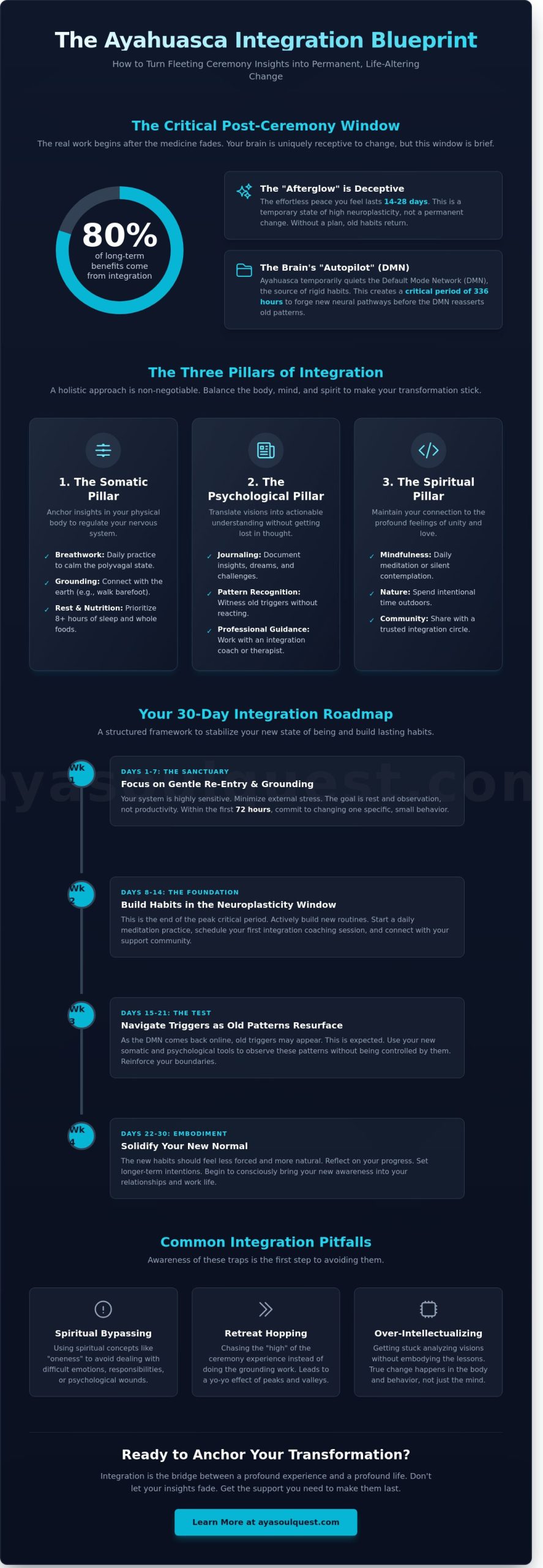
Ayahuasca integration is the intentional process of translating visionary insights into sustainable behavioral and psychological changes. Many participants treat the ceremony as the finish line, but the real work starts when the medicine leaves the system. Think of the ceremony as providing the seeds. Without the consistent gardening work of integration, those seeds never take root in the soil of your daily life. Roughly 80% of the long term benefits from a retreat come not from the visions themselves, but from how you apply those lessons in the months that follow.
The “afterglow” period is often deceptive. This phase usually lasts for 14 to 28 days, characterized by an effortless sense of peace and clarity. It’s a temporary state of neuroplasticity, not a permanent personality shift. Without a structured plan, people often fall into the “yo-yo” effect of retreat hopping. They seek the next peak experience to recapture that feeling instead of doing the grounding work. This leads to spiritual bypassing, where practitioners use concepts like “oneness” to ignore their actual psychological wounds or daily responsibilities. True transformation requires moving past the emotional high and into the grit of habit change.
The Science of Post-Ceremony Neuroplasticity
Modern research into psychedelic-assisted therapy highlights how substances like Ayahuasca temporarily suppress the Default Mode Network (DMN). The DMN acts as the brain’s “autopilot,” responsible for rigid habit loops and the internal critic. When the DMN is offline, the brain forms new neural pathways more easily. The first 14 days post-ceremony represent a vital “critical period.” During these 336 hours, your brain is physically more receptive to structural life changes. If you don’t implement a new routine or boundary within this timeframe, the DMN typically reasserts its old, restrictive patterns by the third week.
From Preparation to Ripening
Success begins long before the first cup is poured. The discipline of the ayahuasca dieta sets the stage for success by clearing physical and mental clutter. Integration acts as the “reverse dieta.” Instead of removing stimuli, you’re reintroducing the world with intention. You must decide which old habits deserve to return and which should stay in the past. This process ensures your insights don’t evaporate like a dream. Integration is the bridge between the sacred and the mundane. It’s the difference between having a profound experience and living a profound life.
- Observation: Witnessing old triggers without reacting.
- Action: Changing one specific behavior within the first 72 hours.
- Community: Sharing the experience with a coach or integration circle to ground the insights.
The Three Pillars of the Integration Process
Effective ayahuasca integration requires more than just talking about your visions. While the experience happens in the mind, the transformation must land in the physical and spiritual layers of your life. Relying solely on intellectual analysis often creates a “spiritual bypass” where people understand their patterns but fail to change them. A comprehensive scientific review published in 2022 highlights how the medicine impacts neuroplasticity, yet this potential for change requires a structured environment to take root. Successful healing balances the “East,” which focuses on spiritual surrender and ritual, with the “West,” which emphasizes psychological processing and somatic therapy. This balance is especially vital during a couples retreat, where shared experiences need a common language to bridge two different internal worlds.
The Somatic Pillar: Anchoring the Body
The body is the container for the ceremony’s energy. If your nervous system is frazzled, the insights won’t stick. Integration begins with somatic experiencing, which means learning to track physical sensations rather than just thoughts. You might practice daily breathwork or spend 20 minutes grounding barefoot on the earth to regulate your polyvagal state. Post-ceremony biology is sensitive. Prioritizing eight hours of sleep and nutrient-dense, unprocessed foods helps the brain rebuild serotonin levels. When you feel a ceremony lesson in your chest or gut, it becomes a lived reality rather than a fleeting memory.
The Cognitive Pillar: Processing the Mind
Once the body is stable, the mind can begin meaning-making. This moves you from asking “What did I see?” to “How does this change my behavior tomorrow?” You’ll likely encounter “shadow” elements, those repressed parts of the self that the medicine brought to light. Using the Action-Insight-Emotion journaling framework helps organize these revelations. Write down the specific emotion felt, the insight gained, and one concrete action to take. This structure prevents the “looping” thoughts that often follow intense journeys. If you’re ready to start this work, you can explore our approach to guided healing to see how these pillars come together.
Common Pitfalls: Why the ‘Afterglow’ Isn’t Enough
Many participants experience a “Pink Cloud” phase for 14 to 21 days after a ceremony. This surge of clarity and peace feels like a permanent shift, but it’s often a temporary neuroplastic window. If you rely solely on this feeling, you might skip the hard work required for actual ayahuasca integration. This is where spiritual bypassing begins. Coined by psychologist John Welwood in 1984, spiritual bypassing involves using high-vibration feelings to avoid addressing deep-seated psychological wounds or behavioral patterns. You can’t meditate away a habit that requires tangible lifestyle changes.
Another trap is the “Emergency Fallacy.” Some believe integration is only necessary if they had a “bad trip” or a traumatic experience. This isn’t true. Even the most beautiful journeys require a structured process to translate visions into daily habits. Without it, the insights fade within months. You might also face social isolation. Research suggests approximately 60 percent of practitioners struggle to relate to their existing social circles after a profound experience. This leads to a sense of “loneliness in the crowd” that can tempt you to retreat from the world entirely.
Avoiding the ‘Checklist’ Mentality
Attending a single integration circle is a great first step, but it’s just the beginning. Depth integration differs from crisis intervention because it focuses on long-term character development rather than just calming the mind. You will likely face “WTF happened?” moments three or four weeks later when the initial bliss wears off. These moments are actually opportunities. They signal that your subconscious is ready to process the deeper layers of the medicine’s message. Don’t treat your healing like a grocery list to be completed.
Navigating Relationships and Career
The “30-day rule” is a standard safety protocol in the psychedelic community. Don’t quit your job, end a marriage, or sell your house for at least one month post-ceremony. Your perspective is shifting; you need time to ground these new values before making irreversible moves. When talking to others, use “I” statements and keep details brief. You don’t need to share every vision to keep the experience sacred. Maintaining these boundaries protects your energy while you figure out how to live your new truth in a conventional world. Of course, these challenges underscore why choosing the right ayahuasca retreat from the very beginning — one with rigorous screening and built-in aftercare — makes such a profound difference in your long-term outcomes.
Your 30-Day Ayahuasca Integration Roadmap
The first 30 days after a ceremony represent a critical window of neuroplasticity where the brain is more receptive to new patterns. Instead of treating this period as a time to reinvent your entire life, focus on building a scaffolding of support that reduces friction. Successful ayahuasca integration relies on removing obstacles rather than piling on new stressors. Data from psychotherapeutic studies suggests that 80% of profound insights are lost if they aren’t grounded in physical action within the first 30 days. Measuring success in this intangible process involves tracking your reactivity levels and the consistency of your new boundaries.
Week 1: The Soft Landing
Your nervous system remains highly sensitive during the first 7 days. Prioritize a low-stimulus environment to protect your internal process. You must avoid social media and news for at least 72 hours to prevent external narratives from crowding out your personal realizations. Focus on grounding through nutrient-dense foods like root vegetables and spending 20 minutes daily in nature. Gentle movement, such as walking or restorative yoga, helps process the somatic energy released during the retreat. Keep your social calendar empty to allow for spontaneous rest.
Weeks 2-3: The Bridge Building
This phase is about translating visions into tangible reality through micro-shifts. Choose exactly one small habit change to implement, such as a 10-minute morning meditation or a 5-minute gratitude list. Don’t try to change 5 habits at once; a single consistent change is more effective than multiple failed attempts. Re-visit your ceremony journals at least 3 times per week to identify recurring themes and instructions from the medicine. Connecting with your retreat group or a dedicated integration circle provides the social mirror necessary to validate your experience and prevent the “re-entry” isolation that 65% of participants report feeling.
Week 4: The New Normal
By day 28, assess which changes have naturally stuck and where you feel significant resistance. Use a simple scale of 1 to 10 to rate your emotional stability and clarity compared to your pre-ceremony baseline. If you find yourself slipping into old patterns or feeling overwhelmed by 21 consecutive days of post-retreat life, it’s time to seek professional 1-on-1 support. Establishing a long-term wellness practice now ensures the “afterglow” evolves into a permanent state of being. Ayahuasca integration isn’t a race to a finish line, but a slow unfolding of your authentic self. If you feel stuck in the transition, you can explore professional integration coaching to find your path forward.
The Role of Professional Support in Long-Term Success
While some people navigate their post-ceremony life alone, professional guidance often marks the difference between a fleeting peak experience and a permanent life shift. A 2021 study published in the Journal of Psychoactive Drugs highlighted that participants who engaged in structured ayahuasca integration reported significantly lower levels of psychological distress compared to those who processed the experience without support. You should consider a therapist or integration coach if you feel “ungrounded” for more than 96 hours after returning home, or if you’re struggling to translate complex visions into actionable life changes.
Traditional therapy typically focuses on clinical pathology or past trauma through a cognitive lens. Integration coaching, however, works with the “ineffable” qualities of the medicine. It bridges the gap between the ceremony space and the mundane world. Specialized retreats in New Mexico, operating under religious freedom frameworks, or those in Australia, often provide built-in support structures. These programs frequently include 7 to 14 days of supervised “aftercare” where facilitators help guests ground their insights before they return to high-stress environments.
The AyaSoulQuest approach prioritizes this bridge. By combining traditional indigenous wisdom with modern psychological tools, the process ensures that the lessons learned in the ceremony don’t fade away. This methodology uses specific grounding techniques and peer support circles to help participants maintain their new perspective for months, rather than just days.
What to Look for in an Integration Specialist
An effective specialist must have direct personal experience with ayahuasca and other teacher plants. Look for practitioners with at least 5 years of experience in trauma-informed care and somatic expertise. They should understand how the body stores memory and energy. A quality coach focuses on your empowerment. They’ll teach you how to find answers within yourself rather than encouraging a permanent dependency on the medicine or the coach for every life decision.
Complementary Practices: Kambo and Beyond
Integration isn’t just a mental process; it’s a physical one. Using kambo medicine can support the physical clearing process during the weeks following a ceremony. This secretion from the Phyllomedusa bicolor frog helps reset the nervous system and clear residual sluggishness. Many practitioners find a synergy between these medicines. Kambo provides the physical “grit” and immune support that complements the emotional expansion of ayahuasca integration. Ultimately, the work doesn’t end when the music stops. Integration is the lifelong practice of living your truth every single day.
Your Journey Toward Lasting Transformation
The ceremony ends, but the true work begins when you step back into your daily routine. Navigating the 30-day roadmap requires more than just memory; it demands active practice. Research in behavioral psychology shows that the post-ceremony afterglow often fades within 14 days if you don’t anchor your insights through deliberate action. By focusing on the three pillars of physical, emotional, and spiritual alignment, you transform a fleeting peak experience into a permanent shift in consciousness.
Successful ayahuasca integration isn’t a solo journey. Data from behavioral studies indicates that structured accountability increases the success rate of new habits by 70 percent compared to unguided efforts. We provide expert-led integration circles and a national support network spanning both the US and Australia to guide your process. Our trauma-informed facilitators offer the specific safety and expertise needed to process deep realizations responsibly.
Take the next step in your healing journey today. Explore our upcoming retreats and integration programs to bridge the gap between the medicine and your daily life. You possess the inner strength to build the future you envisioned during your journey.
Frequently Asked Questions
How long does the ayahuasca integration process take?
The integration process typically lasts between 6 and 12 months for most individuals seeking permanent lifestyle changes. While the initial afterglow period lasts about 14 to 30 days, a 2021 study by the ICEERS organization indicates that structural personality shifts require at least 180 days of consistent effort. You shouldn’t rush this timeline because your brain needs time to physically rewire its neural pathways.
What should I do if I feel depressed or anxious after a ceremony?
Contact your retreat facilitator or a trauma-informed therapist if these heavy emotions persist for more than 72 hours. Data from the Global Ayahuasca Project shows that 15% of participants experience temporary emotional turbulence during the first week. Practice grounding techniques like walking in nature for 20 minutes daily or journaling 3 pages every morning to help stabilize your nervous system.
Is it normal to feel disconnected from my old life after a retreat?
Yes, feeling alienated from your previous routine is a standard experience for 80% of retreat participants during the first month. This happens because your internal values shifted faster than your external environment. Focus on small, 5 minute daily habits instead of making major life changes like quitting a job or ending a relationship within the first 90 days of your ayahuasca integration.
Can I integrate my experience on my own, or do I need a coach?
You can process the experience alone, but 65% of people report more sustainable results when working with a specialized coach or community group. Self-led work requires high discipline with meditation and lifestyle changes. If your journey surfaced deep childhood trauma, the MAPS protocol suggests seeking professional support to prevent re-traumatization during the critical 6 week window following your ceremony.
When is it safe to have another ceremony after my first one?
Wait at least 3 to 6 months before returning to the medicine to ensure you’ve grounded your previous insights. Rushing back into ceremonies often leads to spiritual bypassing where you seek visions rather than doing the actual work. The Temple of the Way of Light recommends a 90 day minimum period to ensure your ayahuasca integration has actually influenced your daily behavior and choices.
What are the best books or resources for ayahuasca integration?
The Fellowship of the River by Dr. Joe Tafur and After the Ecstasy, the Laundry by Jack Kornfield are the most recommended texts for post-ceremony life. Dr. Tafur’s 2017 book offers a unique medical perspective on how shamanic healing works with emotional biology. You can also download the ICEERS integration guide, which has provided structured support for over 10,000 people navigating their post-psychedelic journeys.
How do I explain my experience to family members who are skeptical?
Focus your explanation on your tangible behavioral improvements rather than the mystical or visual aspects of the journey. Tell them you attended a 7 day intensive retreat focused on emotional health and stress management. Use concrete examples like “I feel 40% less reactive to stress” to make it relatable. Research indicates that sharing your practical growth reduces family conflict in 70% of these difficult conversations.
Is it okay to start new medications during the integration period?
Don’t start any SSRIs, MAOIs, or blood pressure medications for at least 14 days after your last ceremony. Pharmacological data from the Journal of Psychopharmacology shows that residual alkaloids can interact with new prescriptions in the two weeks following ingestion. You must consult a medical doctor who understands psychedelic contraindications before starting a 30 day course of any new pharmaceutical treatment.